We use cookies on our website. Cookies help make the website more user-friendly, efficient, and secure.
Please select your cookie preferences
Strictly necessary cookies are cookies required for the website to function and provide the basic information requested by the website user. These cookies are not used for tracking users.
YouTube cookies allow the playback of YouTube videos directly on our website. When YouTube cookies are used personal data or connection information, such as the IP address, may be transmitted to YouTube. By accepting YouTube cookies, you consent to the transfer of this data to YouTube. Please see our privacy policy for more information.

How do communities adapt when health, security and economic crises reshape everyday life? How can social and technological change remain inclusive? And how do we strengthen democratic engagement in times of uncertainty?
Across Europe, societies are undergoing profound transformation. Emerging threats intensify polarised public debate, test trust in institutions and place social cohesion under pressure – reshaping how people relate to one another and how inclusive and stable our communities remain. Addressing these challenges requires strong perspectives from the Social Sciences and the Humanities. Beyond technological innovation, in fact, we need deeper insight into behavioural change, democratic engagement and the conditions that enable resilient societies and effective crisis preparedness.
Our innovation ecosystem SOCIETY places these perspectives at its core. It builds on thematic strengths in education, migration, democracy and inclusion, while embedding social science expertise across domains such as health, security, digitalisation and climate. Moreover, the ecosystem helps advance novel approaches to co-creation and citizen engagement, helping to better integrate the needs of those who will ultimately benefit from research outcomes into the scientific process itself.

Pandemics, major environmental events, economic and geopolitical shifts: for many Europeans, crisis has become part of the lived reality of recent years. These developments highlight the importance of strengthening the capacity of institutions, communities and systems to prepare for, respond to and learn from crises.
Through innovative, cross-sector collaboration bringing together multidisciplinary research, public authorities, civil society and industry, we advance strategies and practical frameworks that enhance Europe’s crisis preparedness and support adaptive governance.
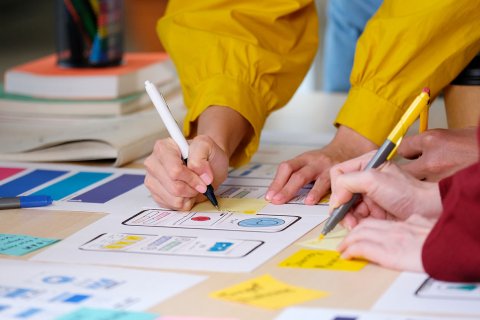
Technological progress alone does not solve complex societal challenges. Research becomes stronger when it reflects how people live, think and interact. Perspectives from the Social Sciences and the Humanities (SSH) help ensure that STEM innovation is socially grounded, ethically informed and responsive to real needs.
We work across research domains to integrate SSH perspectives and participatory approaches into a wide range of innovation projects, making them more inclusive, relevant and impactful for society.

Polarisation, disinformation and declining trust in institutions are just some of the reasons why democratic systems across Europe are facing increasing pressure, all while the shared need for greater transparency, inclusion and meaningful participation in decision-making processes is clearer than ever. Strengthening democracy requires innovative governance models, digital participation tools and evidence-based policy design that reconnect institutions with the people they serve.
We foster collaborative innovation that brings together research, public authorities, and civil society actors to develop solutions that strengthen democratic practices, reinforce institutional trust and promote societal cohesion.
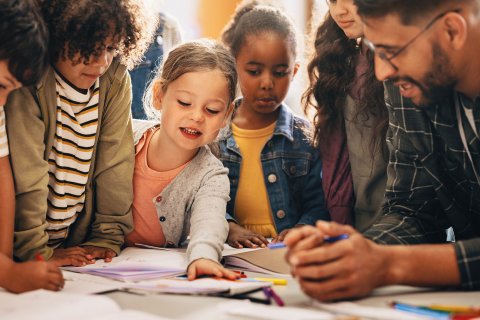
In the context of accelerating digitalisation, evolving labour markets and increasing social diversity, new learning models and educational practices are needed to foster critical thinking, inclusiveness and lifelong skills development.
To strengthen inclusive, high-quality learning across Europe, we help shape collaborative research that translates knowledge into forward-looking solutions, connecting academia, education institutions, policymakers, technology actors, and the learners and communities they serve.
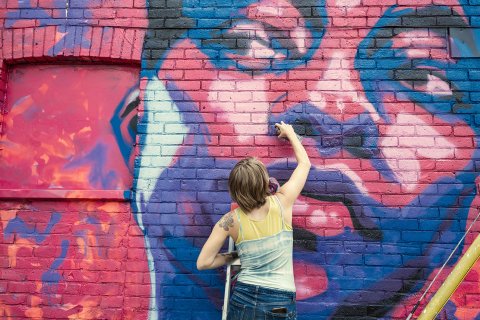
By opening spaces for reflection, experimentation and collective imagination, cultural and artistic actors can, more than ever, play a vital role in helping communities explore new ways to address the pressing challenges of our time, ultimately making art a major driver of responsible change.
We help turn creative processes into tangible societal impact through cross-sector collaboration that strengthens Europe’s cultural diversity, safeguards its heritage and supports continued artistic experimentation.
.png)
.png)
.png)
.png)

Discover how our projects help drive change and real-world impact to strengthen inclusive, resilient societies for Europe.




.png)